
Pennies vs Stomach Acid
We all know our stomachs have strong acid in them, but strong enough to eat through pennies? Not possible! Or is it??


Can you believe the damage her stomach had already done?




We all know our stomachs have strong acid in them, but strong enough to eat through pennies? Not possible! Or is it??


 Please note: You may notice the shape and color change to B's upper fang. This was from years of cage chewing before he was adopted. The brown color change is not 'dirt' or 'stain" but restorative dentin. When worn down slowly the tooth tries to heal and protect itself from invasion of the pulp chamber by putting a layer of thicker dentin over the chamber. In Baher's case, the radiographs and dental probing confirmed that the crown was intact and safe. We see similar changes in dogs who fetch tennis balls year after year.
 Low level laser therapy uses light energy to stimulate a variety of actions on tissues. Some of the most well documented actions of laser therapy include stimulating rapid formation of collagen, accelerating tissue repair, increasing blood flow, pain relief by decreasing nerve sensitivity and by promoting release of endorphins and reducing edema (swelling) by promoting the activity of the lymphatic system. These actions on tissues allow laser therapy to be beneficial for many conditions.
Some of the most common clinical uses of low level laser therapy are:
· Adjunct pain relief for arthritis
· Post-surgical swelling and inflammation
· Slow or non-healing wounds (such as lick granulomas, diabetic ulcers, burns, etc.)
· Muscle tightness/soreness
· Nerve and spinal cord lesions
· Tendon and ligament injuries
· Fracture healing
Laser therapy is quick, painless and is performed on animals which are awake and minimally restrained (if at all). A typical treatment takes only a few minutes or less and most animals experience little to no sensation associated with the treatment. All orthopedic surgery patients will now receive laser treatment as part of their overnight hospitalization. Laser treatment can also be requested post-operatively for any procedure- just ask the technician who admits your pet. In addition, Dr Amanda Hensley is available for laser treatments every Monday, Wednesday and Friday, and some Saturdays. If interested, please call West Ridge Animal Hospital to schedule an appointment.
Anyone who has had a massage knows the wonderful benefits that come with it. But even beside the relaxation and peace it affords, there are actual medical benefits as well. Massage:
• increases gastrointestinal motility to prevent or relieve constipation,
• reduces back and belly pain,
• lessens anxiety, and
• improves circulation and lymphatic drainage, which carries bacteria to lymph nodes to be destroyed.
One of the most advantageous circumstances for massage is post-operatively. It is easy to overlook the fact that lying on a steel operating table leaves one’s muscles stiff and sore; animals receiving a prophylactic dental are even more prone to stiffness due to the way their heads are positioned during the procedure. To alleviate this side effect, we offer optional post-operative massages. Other situations in which massage is helpful include:
• stressful times,
• after hunting or extensive exercise,
• when a dog is constipated,
• active dogs who are boarded and not able to get their usual exercise,
• relief for muscles sore from compensating for an injury to a limb, and
• comfort for senior dogs or those suffering from arthritis, spondylosis, or hip dysplasia.
For those whose dogs would benefit, we suggest scheduling an appointment for a massage with either Nikki or Aurora (both Certified Veterinary Technicians). These two gals recently had the opportunity to attend a Medical Massage continuing education course through Colorado State University’s College of Veterinary Medicine and Biomedical Sciences. This course was taught by Dr. Narda Robinson, the “country’s leading authority on scientific complementary and alternative veterinary medicine (CAVM)” (Colorado Veterinary Medical Association).
We strongly believe in the power of massage and look forward to assisting your canine companions!
We recently had a darling patient, Zoey, who underwent a lateral cruciate repair with a traveling orthopedic specialist, Dr Trent Gall (from Aspen Meadow Veterinary Specialists). Here, you see Dr Hensley performing exercises on Zoey, as well as giving our Technicians some education about the process: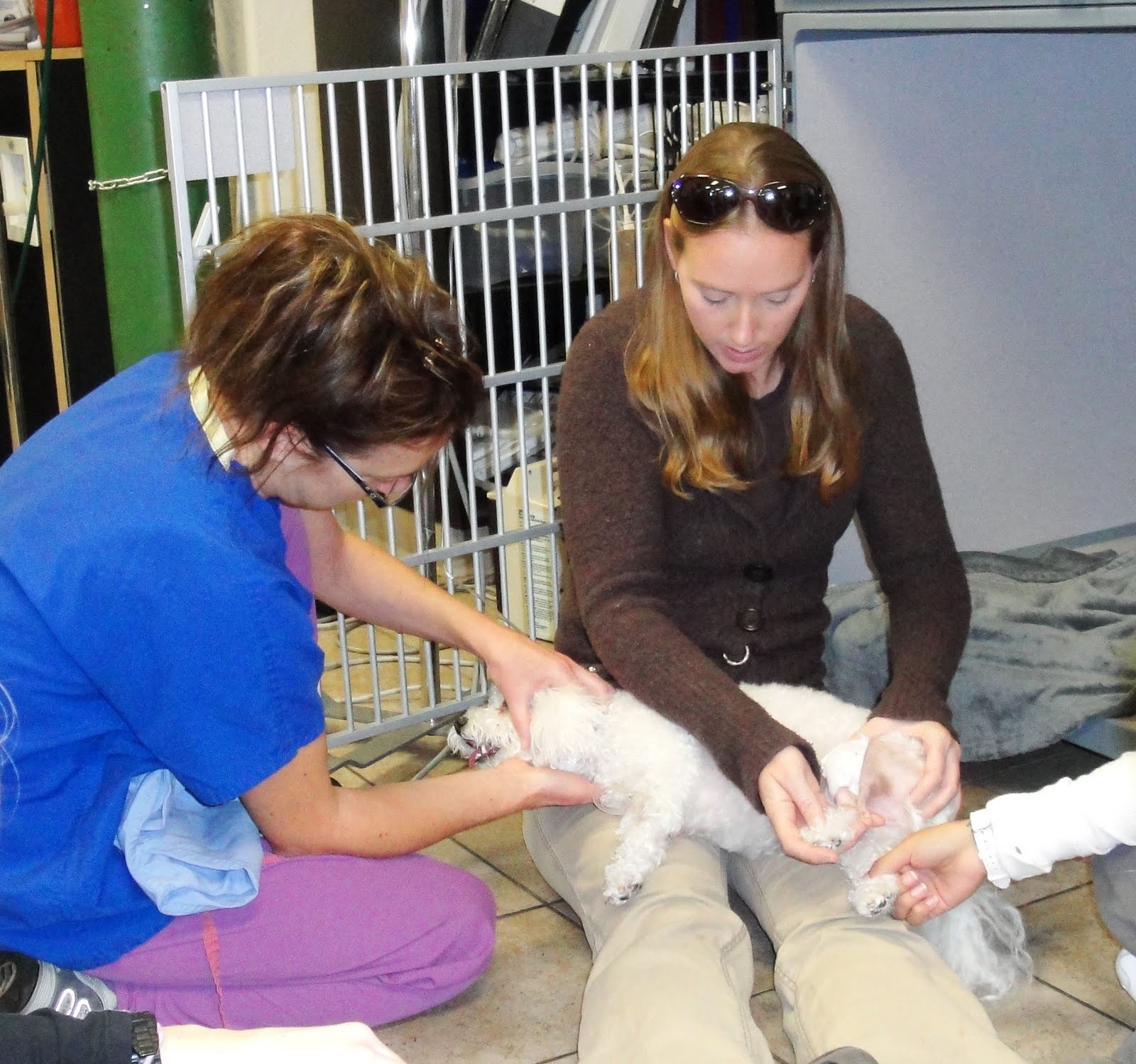
When a leg is injured (whether accidentally or surgically) and the animal is not using it normally, they can begin to lose some of their normal range of motion and flexibility. So, whenever an animal is not using a limb normally, particularly after a surgery, it is best to do Passive Range of Motion (PROM) exercises. PROM exercises mimic the natural, active motions at a joint that are normally performed by the animal on its own (active range of motion) through their everyday activities. Dr Hensley combines PROM exercises with muscle stretches to relieve tightness and improve flexibility. To further enhance comfort (and arguably, enhanced comfort = enhanced healing), massage is also performed which increases circulation to the area and dissipates swelling. Ideally, these exercises are done until the animal recovers to the point that they are doing it on their own. If these steps are not taken, particularly with certain injuries, it may result in irreversible muscle contractures and loss of range of motion in a joint.
To uphold our comprehensive care philosophy, all orthopedic surgical patients will now receive these extra services as part of their overnight care. Additionally, "parents" of our patients are given an at-home therapy plan which includes these exercises.
The following slideshow will take you through the steps of a canine orchidectomy (castration) surgery here at West Ridge Animal Hospital:
