
Showing posts with label Wildlife. Show all posts

Wednesday, August 15, 2012

Some Surprising Summer Safety Situations

Ah summer… days filled with sprinklers, beaches, yard work, and other adventures.  Many of us understand how to keep ourselves and our children safe, but there are some hidden dangers for your pets of which you may not be aware.

-    Hoses: just pieces of innocuous yard equipment, right?  Usually, yes.  However, some dogs are actually being scalded by hot water from hoses that bake in the sun.  If using an outside hose for fun or a bath let it run for a moment and check the water temperature before pointing it at your pet- or your child, for that matter!

-    Solid ground: the ground is a hazard?  Yes.  Animals, obviously, don’t wear shoes when they go outside.  On high-temp days, try out the concrete, asphalt, and even dirt with your own bare feet and your pet will thank you!

-    Cars: NEVER leave an animal in an unoccupied car, even with the windows open.  Temperatures in cars increases alarmingly fast and can be harmful- even fatal- in minutes.

-    Wildlife and pesky insects: not only can they be irritating, they can also inflict illness.  Leptospirosis, intestinal worms, heartworms, distemper, rabies, and tick-borne diseases can all be avoided with proactive measures.  Verify with your veterinarian that your pet is up to date on all vaccines and preventive medications.

-    Pools, beaches and lakes: we all know that these can be very dangerous if we’re not careful.  Here are some suggestions for keeping your four-footed family members free from harm.

  • Never force an animal into water, not all dogs enjoy or are adept at swimming.
  • There is a very rare risk of water intoxication caused by dogs gulping large amounts of water- be on the watch for strange behavior during or after playing in water.
  • It’s a good idea to wear a life vest and not swim too close to your dog so that you don’t get scratched or pulled under accidentally.
  • Be sure to provide fresh drinking water.
  • Keep a close eye on your pet for signs of dehydration, ear infections or other water-related issues.
-    Landscaping: This category has sub-categories all its own…
  • ASPCA’s website to discover what plants are toxic to animals so that they can be placed where your pets won’t have access to them.  
  • One must also be careful when applying fertilizers and other chemicals to the yard to restrict exposure to any animals.  
  • Metal garden edging may pose a hazard to dogs as it can possibly cut them between their tender paws.  We recommend using rubber, brick, or wood instead.
  • It’s a good idea to do an inspection of the yard periodically to check for threats to your pets’ safety.  Oftentimes a piece of fence comes loose or a nail becomes exposed- both treacherous situations for sure!

With just a little extra effort and close observation, we can all enjoy a safe, happy summer!

Monday, February 13, 2012

Skunk rabies confirmed in Weld County


Skunk rabies has been confirmed in Weld County earlier this month. While bat rabies has been in our area for awhile, terrestrial wildlife with rabies is more of a concern due to increased potential for exposure to pets and other domestic animals. The Weld County Department of Public Health and Environment lists the following as ways to prevent exposure to rabies:

• Do not feed, touch or handle wild animals and be cautious of stray dogs and cats
• Teach children to leave wildlife alone and tell you when they have been bitten or scratched
• Have dogs, cats, horses, and livestock vaccinated regularly by your veterinarian
• Maintain control of pets by keeping them indoors and under supervision
• Spay or neuter pets to reduce the number of unwanted or stray animals in the neighborhood
• Call local animal control to remove stray animals from the neighborhood
• Keep trash bins tightly closed and do not leave pet food outdoors

Be especially wary of any wildlife that acts out of the norm, i.e. nocturnal animals out at daytime or wild animals seeming to be tame. These signs can point to illness.

For more information:
Weld County Press Release
Colorado State rabies brochure

Thursday, September 8, 2011

VET help at Bastrop Fires

When the distressing news coming from Texas about the Bastrop fire reports that nearly 1400 houses have burned and at least two people have died, it’s easy to get caught up in the disaster from a human standpoint. Unfortunately, wildfires also affect countless animals, including search and rescue dogs that are assisting rescue efforts. This is where the VET (Veterinary Emergency Team) of Texas comes in. Yesterday, they deployed several members- including DVMs, vet techs, and vet students- to care for the dogs helping emergency responders and to assess the needs of other affected animals.

Obviously, keeping structures from burning and people safe is priority #1. A close second, in our opinion, is the safety of the animals. Losing your home is devastating, losing your pet as well is absolutely catastrophic. After all, many people consider their pets family members. And we haven’t even touched on all the wild animals who lose their homes, get injured, and possibly perish.

To this end, Dr Colin Combs and West Ridge Animal Hospital have been very active participants in our local Weld County Animal Response Team (Weld CART) for several years now. Fortunately, there hasn’t been much need for it so far. They did, however, all respond during Linkthe Windsor tornado in 2008; rescuing countless pets and wild animals from certain ruin. The Weld CART team is a “group of law enforcement, fire, veterinary, shelter, and other agencies with a shared goal of increasing awareness of animal issues in disasters through public education and awareness”. They also assist in providing resources to local jurisdictions throughout the county in the event of a disaster.

Veterinarians, by default, are extremely compassionate people. This is just another way they are able to fulfill their passion of taking care of helpless animals.

-- Weld CART is accepting volunteers and donations of items needed in case of an emergency. If you are able to do so, it is greatly appreciated!--Link

Saturday, September 3, 2011

Martens and Poor-Wills and Grebes, OH MY!


The end of last week was an eventful one for West Ridge Animal Hospital (WRAH) and surrounding wildlife; when I came in to work Friday morning we had a Western Grebe, an American Marten, a Poor-Will (aka Nightjar), and a pigeon here for treatment! All four were stable and awaiting transport to Greenwood Wildlife Rehabilitation (GWR) for, as the name implies, rehabilitation and future release back to the wild.

Pigeons, unfortunately, are a common site here. The other three, however, were a bit of a treat. That is, if you consider possible bites and examining fractious wildlife a “treat”- which we here do. Taking care of injured wildlife is one of the ways we connect so tightly with nature, it’s our labor of love; it also creates an environment that encourages learning and reminds us that we humans share this world with innumerable miraculous animals that sometimes need a little assistance…

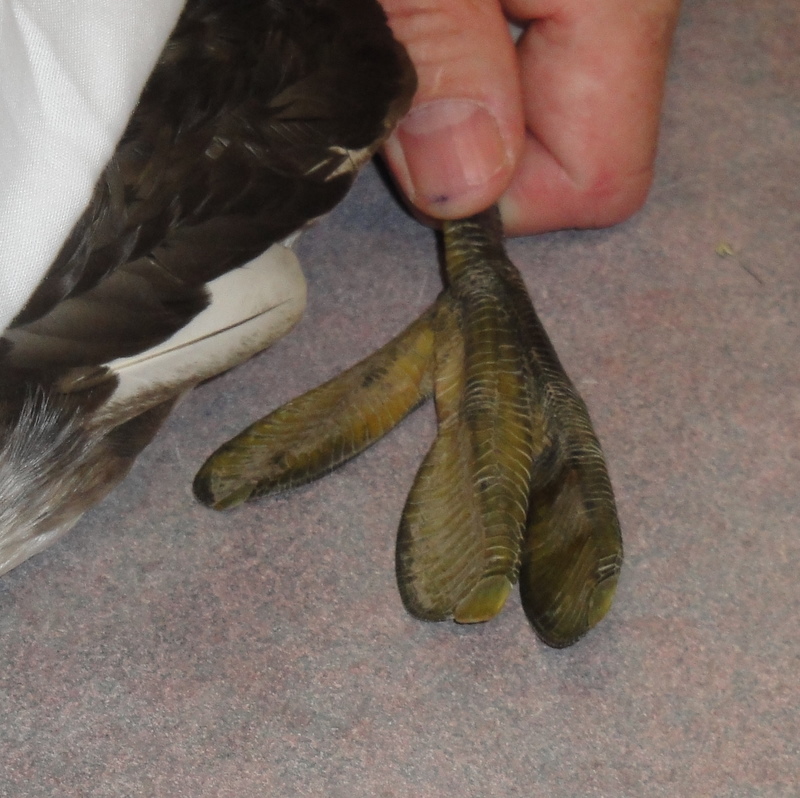
For instance, before I started working here, I never knew that Grebes and Cormorants are unable to take off from land. Whether to facilitate their extraordinarily expert swimming skills, or perhaps just an evolutionary oversight, Grebes’ legs are so far back on their bodies that walking is difficult and taking off from solid land is impossible. The problem arises when a Grebe sees what it thinks is a body of water, but actually turns out to be only a shallow puddle in a parking lot. Fortunately, they are usually not injured from this rude awakening, but we do want to play it safe and have Dr Colin Combs examine them. Once deemed healthy, the birds take a trip down to the wildlife experts at GWR for release back to the wild.


Poor-Wills visit us less often. This particular one had a run-in with a window, injuring his shoulder and requiring extra care. He will spend some time at GWR and will hopefully heal fully and also be released. Shoulder injuries in birds, though, can be rather difficult. We wish him the best!


The American Marten was a new experience for all of us here at WRAH! These animals usually live in hilly, forested areas- NOT Milliken window wells where this little guy was found. There are stories of Martens who unknowingly hitch rides on trucks to unexpected places, we can only surmise that this is the case here. He looks like a small, cute ferret- right up until he screeches at you and shows his extra sharp teeth, used for defense and acquiring meals. Now, we humans know that this response is not necessary in this situation, but can you imagine just how frightening it must have been to be here?!? Dr Combs did not see any health issues and relinquished him to the wildlife experts, too.

A guaranteed happy ending in at least three out of four cases last week. We’re happy we were able to help these fascinating creatures!

Saturday, July 3, 2010

Weld County Zoonoses Newsletter

Learn the latest about animal-borne diseases in Weld County. This includes West Nile Virus, Rabies, Plauge and Hantavirus Pulmonary Syndrome.

Weld County Department of Public Health and Environment June 30, 2010 Zoonoses Newsletter (PDF file requires Adobe Acrobat)

Some Highlights:

WEST NILE VIRUS (WNV)
Our contractor, OtterTail Environmental Inc., began adult mosquito surveillance on June 7, 2010, conducting weekly mosquito trapping at 24 locations in the county. In the past week alone, the trapping yielded a total of 27,412 mosquitoes with 1,123 (4%) Culex mosquitoes. To date 24 pools of Culex mosquitoes have been submitted to CDPHE for testing. No mosquito pools have tested positive for WNV.

To avoid West Nile virus, please remember to:

  • Use insect repellant for ALL outdoor activities. Use DEET, Picaridin or Oil of Lemon Eucalyptus, (Follow The Label Directions Carefully).
  • At Dawn and Dusk dress in long sleeves and pants when outdoors and be sure to cover feet and ankles.
  • DRAIN and EMPTY all containers (toys, kiddy pools, flowerpots, buckets) in your yards because mosquitoes carrying WNV can bite at anytime and anywhere, even in your own yards. Make sure your gutters and downspouts are clean and running freely.
  • Check your home to make sure all windows and doors have screens and are in good condition. This will reduce the chance of mosquitoes and bats gaining entry into your home.
  • For additional information on repellents and on how to protect you and your family around home go to the Colorado Fight the Bite web page.
RABIES
A total of twenty (20) animals from Weld County have been tested for rabies so far in 2010. This includes five (5) bats, nine (9) domestic animals (cat (3), dog (5), cow (1)), two equines and four (4) wild animals (skunks). To date, only one of these animals have tested positive for rabies, a bat.

Bats historically have been the most common carriers of rabies in Weld County. Do not approach or touch bats particularly if they are seen during the day and/or acting strange. If you awake to a bat in your bedroom or find your children or pets alone with a bat, please call WCDPHE at (970) 304-6415 immediately.

The best way to protect your pet animals is to keep them currently vaccinated for rabies. Keep bats out of your home by sealing all openings and keep screens (in good condition) on all doors and windows.

PLAGUE

A total of three (3) animals, (coyote (2), cat) from Weld County have been tested for plague in 2010. None of these animals have tested positive. In Weld County, plague activity is typically identified by citizens who notice a decrease in prairie dog or other rodent activity. WCDPHE personnel will investigate these rodent die-offs for plague activity and submit samples for testing when available.

Cats are particularly susceptible to plague. Infected cats generally have a history of roaming freely in rural or semi-rural settings and/ or may be known as a good hunter. Cats can be involved in transmission to humans either by bringing infected fleas home or by bites, scratches or respiratory droplets (sneezing). Adequate flea control/protection is advised for these cats.

HANTAVIRUS PULMONARY SYNDROME (HPS)
One case of Hantavirus has been reported in 2010 resulting in death. In Weld County, a total of five (5) cases of HPS have been documented since HPS was discovered, including two (2) deaths. An environmental assessment conducted in 1994 on the Pawnee National Grasslands revealed 10% of the rodents captured were infected with the Hantavirus.

Hantavirus is present in the saliva, urine, and feces of infected mice. People are infected by breathing in the virus during direct contact with rodents or from disturbing dust and feces from mice nests or surfaces contaminated with mice droppings or urine. Please remember to follow CLEAN-UP GUIDANCE for safe clean-up of mice nests or surfaces contaminated with mice droppings or urine.

Tuesday, June 15, 2010

Baby Wild Animals – Cute, Helpless, and WILD!

Once spring arrives, people and animals take advantage of the warmer weather. As baby animals grow up and begin to leave their nests and dens, we may witness their first experiences on their own. At this point in their development they may seem like helpless beings that we need to rescue and care for. Often times, it is better for the animal (and for the human) to let nature take its course.

Sometimes an adult or baby animal may need some assistance, a baby bird might need to be placed back into its nest, or an animal is injured and needs to be brought into the veterinarian; in these cases it is ok to try to help the wild animal. During the warm months, West Ridge Animal Hospital often will have baby animals brought in that are actually just learning to be on their own and will not benefit from our care. Fledgling birds, learning to fly and forage on their own, learn best from their parents and need to be left alone. Often times, small mammals (rabbits, squirrels, etc), may appear to be too young and possibly abandoned but are actually old enough to be on their own.

Please also keep in that many wild animals may carry disease that can transmit to you, your family, and your pets, so please take caution when handling wildlife. It may be tempting to keep a baby animal and try to nurse it back to health, or raise it to be used to humans. However, in the state of Colorado, it is considered harboring wildlife to do so and is illegal. Only facilities licensed by the state can house and care for wildlife.

Here are some tips on baby animals and wildlife:

  • If a nestling is found outside of the nest (blown out of the nest, fell out, etc) – it is possible to touch the baby bird and put it back in its nest – it will not have an effect on its mother caring for it.
  • If a fledgling is found (most adult feathers, unable to fly far distances, juvenile coloring, possible remaining baby down), please move it to a safe place nearby if there is any risk of injury from pets or cars. The parents are probably close by and watching from afar.
  • If a baby bunny is found that has its eyes open, and is eating on its own – it is old enough to be on its own and does not need to be brought in.
  • If a nest of baby bunnies is found and you are afraid it may be abandoned, you can sprinkle some flour at the entrance of the nest and leave them overnight. Check on them in the morning, if the flour is disturbed, their mother has visited and taken care of them, if the flour is not disturbed, you can bring them in for care.
  • Ideally, if the wild animal can be taken directly to the wildlife rehabilitator they will have head start in their care. If the animal is obviously injured or very sick, please bring in for medical care, we will always treat sick or injured wildlife and transfer it to a wildlife rehabilitator once the animal is stable.
For more information on what to do if you find a baby bird or baby animal, please refer to these information sheets from the Greenwood Wildlife Rehabilitation Center:
http://www.greenwoodwildlife.org/documents/factsheets/FoundBabyBird.pdf
http://www.greenwoodwildlife.org/documents/factsheets/FoundBabyMammal.pdf

Friday, April 16, 2010

Rabies Information

Rabies was recently confirmed in a horse in Colorado. The following is information from the Colorado Veterinary Medical Association regarding Rabies:


Rabies is a viral disease infecting the brain and central nervous system. The clinical appearance of rabies typically falls into two types: “aggressive” and “dumb.” Aggressive rabies symptoms include combativeness and violent behavior and sensitivity to touch and other kinds of stimulation. There is also a “dumb” form of the disease in which the animal is lethargic, weak in one or more limbs, and unable to raise its head or make sounds because its throat and neck muscles are paralyzed.


Rabies can be passed from animals to humans. Elisabeth Lawaczeck, state public health veterinarian at the Colorado Department of Public Health and Environment added, “The best way to protect your family from rabies is to keep your pets currently vaccinated for rabies through your local veterinarian, humane society, or animal shelter. Rabies vaccination performed by owners will not be recognized by local public health or animal control agencies for licensing or in the event of an exposure to a rabid animal.”


Rabies is spread primarily through the bite of rabid animals, resulting in the spread of the disease through their infected saliva. Rabies also can be spread when saliva from an infected animal gets into open wounds, cuts or enters through membranes of the eyes, nose or mouth. No cure exists for rabies once symptoms appear although there is a vaccine to prevent the infection. Livestock and pet owners are urged to discuss the vaccine with their local veterinarian.


“Animal owners need to primarily look for any dramatic behavioral changes. That is typically one of the hallmark signs that the animal may be suffering from rabies,” said Roehr.


Examples of unusual behavior include: wild mammals that show no fear of people and pets; nocturnal animals that are active in daylight; and bats found on the ground, in swimming pools or that have been caught by a pet. Rabid carnivores, such as skunks, foxes, bobcats, coyotes, dogs and cats, may become aggressive and may attempt to bite people, pets and livestock.


In addition to ensuring that pets and livestock are vaccinated properly against rabies, residents are encouraged to follow these prevention steps:

· Don’t feed wild animals or allow your pets around them. Be sure to teach children to stay away from wild mammals.

· Contact your veterinarian if your dog or cat is bitten or scratched by a wild animal, such as a skunk, bat, fox or raccoon.

· If you suspect you’ve been exposed to rabies, contact your physician without delay.

· Discuss rabies vaccination of your livestock with your veterinarian. Vaccination should be considered for horses and other equines, breeding livestock, dairy cattle or other high-value livestock, especially in areas of the state where skunks have been diagnosed with rabies.

· If you observe a wild mammal acting strangely, especially a skunk, or if you find a dead skunk that isn’t on your property, stay away from it. Strange behavior for a skunk would include being out and about during daytime hours.

· If you must remove a dead skunk on your property, wear rubber gloves or lift the carcass with a shovel or other tool, and double-bag it for the trash.

· Do not allow pet dogs or cats to roam freely, as this increases the chance they may be exposed without your knowledge. Keep dogs in a fenced in yard.

· Take precautions when camping, hunting or fishing. Avoid sleeping on the open ground without the protection of a closed tent or camper. Keep pets on a leash and do not allow them to wander.


Additional Resources

Colorado Department of Agriculture

www.colorado.gov/ag/animals


Colorado Department of Public Health and Environment

http://www.cdphe.state.co.us/dc/zoonosis/rabies/


Colorado Division of Wildlife
http://wildlife.state.co.us/About/OfficesAndPhone/
http://wildlife.state.co.us/WildlifeSpecies/LivingWithWildlife/


Colorado State University
http://www.ext.colostate.edu/pubs/livestk/01819.html
http://csuvets.colostate.edu/equinehospital/Equine_Rabies_For_North_Forty_News_March_2009.pdf
http://www.dlab.colostate.edu/


Rabies information is also available on the Issues section of the CVMA website at www.colovma.com

Horse Confirmed with Rabies in Colorado

Recently released from the Colorado Veterinary Medical Association:

Horse Confirmed with Rabies in Colorado

The Colorado Department of Agriculture is encouraging livestock and pet owners to discuss animal health concerns, including the rabies vaccine, with their local veterinarian after a horse in eastern Arapahoe County tested positive for rabies.

“The department would like to stress two very important points,” said State Veterinarian, Dr. Keith Roehr. “One—animal owners need to be aware that rabies is transferring from one species to another and they should monitor their animals for symptoms; and two—local veterinarians are a valuable resource to help producers decide the best course of action to protect their livestock and pets from rabies.”

According to the Colorado Department of Public Health and Environment, in 2009, there were a total of 103 rabies cases in 20 Colorado counties; one of those cases included a horse. In September 2009, a horse in El Paso County was euthanized and subsequent tests determined the horse was infected with rabies; public health experts believe the horse was exposed in July 2009 to a skunk on its home property in the Black Forest area.
As of April 12, a total of 28 animals have tested positive for rabies in Colorado in 2010: 25 skunks (13 from Elbert County), 1 domestic cat from Prowers County, 1 muskrat from Morgan County, and the 1 horse from eastern Arapahoe County.

Click here for more information on Rabies, including tips for detection and prevention.

Friday, June 20, 2008

Turtle Dangers

West Ridge Animal Hospital is currently caring for two wild Western Box Turtles with injuries....


This girl had the unfortunate luck of being run over by a car. The back half of her shelf was smashed so Dr C used a fiberglass repair kit to fix her up. Above, you see one of our technicians blowing air on it to expedite the drying process. If you look closely, you will see where Dr combs wired the pieces of shell together.


Here you can see the cracks in her top shell.


And this picture is of a poor little guy whose leg got cut by a lawnmower. It is sticking out because it is still too swollen to go in. He is being treated with antibiotics, and is expected to make a full recovery; at which time we will release him back to the wild.

Friday, May 30, 2008

Surgery for a Pelican

One of the pelicans that DOW rescued after the tornado required surgery. Dr Colin Combs stepped up to help him. Throughout the surgery, we all discussed what his nickname should be; we came up with "Thurston Howell III of Windsor" (after Gilligan's Island).


Dr Combs inserting the tube by which Thurston received anesthesia and oxygen.


On the x-ray table for presurgical pictures.


Ouch! That big bruised bump you see? It's the end of his fractured bone trying to pop out.


Wrapping the wing to keep everything sterile.


Dr Combs performing the surgery.


Inserting the pin that will help stabilize the bone internally.


Thurston now has what is called an "external fixator" to keep his fractured bone in place and stable. After 10-12 weeks of healing, all the screws and pins will be removed.


I couldn't resist taking a picture of the pulse ox lead on his foot.


Surgery is done, the fixator is all wrapped for protection.


This picture shows the size and beauty of his wings.


And a final, post-surgical throat check. Watch out, Dr Combs!

West Ridge Pitches In for the Animals

Understandably, the focus has been on people affected and property lost in last week's tornado. However, many domestic and wild animals were injured or left homeless as well.

This is precisely why the Weld County Animal Response Team (CART) was created a couple years ago; it acts as the Red Cross, only for animals. West Ridge Animal Hospital’s Dr. Colin Combs is the current Veterinary Coordinator of CART.

Last Thursday, many of these professional volunteers sprang into action to help any animals affected by the storm. This is a Weld County Sheriffs Department press release on the CART response to the Windsor tornado:

TIRELESS PROFESSIONALS SAVE HOMELESS ANIMALS
GREELEY, Colo. - Animal control professionals trained specifically for disaster response worked together to save approximately 120 animals who were displaced as a result of the tornado. The Weld County Animal Response Team (CART) was established to respond to disaster or emergency situations in the eleven county northeast region of Colorado. The CART is made up of officers from animal control offices with the Weld County Sheriff’s Office, Firestone Police Department, and the Dacono Police Department. In addition the CART team includes professionals from the Humane Society of Weld County, West Ridge Animal Hospital, Alpine Animal Hospital, Vet’s Animal Hospital, and the Eagle Spirit Mobile Clinic. During relief operations the CART team along with Larimer County Animal Control and employees of Code 3 Associates worked together to recover approximately 120 animals. The animals recovered consisted of approximately 68% dogs, 25% cats, and 7% reptiles. The animals were initially taken to a temporary outside shelter where they were logged, any injuries treated, fed, and cared for. Yesterday they were moved to the Humane Society of Weld County where they could be housed inside. The animals will be held free of charge for tornado victims at the humane society in Evans for five days. Anyone looking for their animals can call the Humane Society at 970-506-9550. “We really appreciate the donations from everyone including Wal-Mart, Home Depot, and the United Way”, said Weld County Sheriff’s Office Commander Alan Caldwell. Supplies such as fencing and other hardware donations helped make the operation a success.

Contact:
Deputy Shane Scofield
970-356-4015 x 3909 Office
970-381-7042 Cell
3Hsscofield@co.weld.co.us

For more information about CART visit http://www.weldsheriff.com/CART.html or contact the sheriff’s office animal control unit at 970-304-6500.

In addition, West Ridge is housing several domestic animals that were left homeless, and treated many wild animals as well. Currently staying here at the hospital are the following pets, some displaced from their families:
- a bearded dragon
- two fetal African clawed frogs
- a turtle
- many fish, including three betas, and
- two homeless cockatiels

Here is a sampling of the wildlife that came through West Ridge’s doors:
- a merganser duckling
- two coyote pups
- a hawk
- a cedar waxwing
- a grackle, and
- five pelicans
Merganser duckling


Other than the hawk and the pelicans, all animals were transferred to Greenwood Wildlife Rehabilitation Center. The hawk went CSU, and the pelicans were all treated here. Unfortunately, three of the pelicans suffered “spin wing” and had to be euthanized. One pelican has a non-displaced radial (one of many wing bones) fracture that will heal with cage rest; the other has a displaced humeral (the bone that runs from the shoulder to the elbow) fracture requiring orthopedic surgery.

Thursday, April 3, 2008

Plague Bacteria Confirmed Boulder County

Health officials have just confirmed the presence of the bacteria that causes Bubonic Plague in prairie dog colonies in Boulder County. Although this sounds very alarming on the surface, every summer the same bacteria is found in prairie dogs in Weld County. That’s not to say that we should not heed the warning; prairie dog colonies, although cute, do act as a reservoir for fleas that carry the bacteria. If your pet “visits” with a prairie dog he/she can pick up fleas and transport them home to you. Dogs are fairly resistant to becoming sick with the plague- but cats and people can become ill and die. This brings up several preventative health recommendations for our pets.

Dogs: We do have fleas and ticks in Greeley. It will never be like the southeast- but we do see them each summer. For best protection we recommend Frontline Plus applied monthly until fall. We cannot recommend “generic” brands or home remedies such as garlic or brewers yeast to prevent fleas or ticks. Keeping your dog away from wildlife keeps not only your pet safe, but also the wild animal and your family.

Cats: We strongly recommend keeping your cat indoors year-round. If your cat goes outside and you have any proximity to prairie dog colonies we recommend either Frontline for cats or, even better, Revolution. Revolution prevents fleas and ticks but also prevents deadly feline heartworm and other intestinal parasites. Also, we handle wildlife cases all summer long- the majority of which are injured or killed by cats. Bottom line is that keeping your cats indoors saves wildlife, and prevents your cat from bringing fleas home that could spread the Plague to you and yours.

Tuesday, February 19, 2008

Best Preventative for Canine Distemper - Vacination

You may have recently seen information about a Canine Distemper (CDV) outbreak in raccoons found in Wheatridge, CO. The good news is that effective vaccines have virtually eliminated CDV in domestic animals. However, because there is no approved vaccine for wildlife, Canine Distemper is endemic to the raccoon population throughout the Front Range. For many years, West Ridge has seen raccoons with distemper and last year we saw a few cases in the local coyote population. It should be stressed that Canine Distemper can strike wildlife, dogs, and ferrets. There is no danger to humans or our feline friends from CDV. Additionally, all dogs who have received the full series of puppy vaccinations and receive a booster vaccination every three years are very safe from infection.

Canine Distemper is spread through respiratory secretions via cough and runny nose, and other bodily fluids. It is most often contracted through breathing in the airborne viral particles. Symptoms of CDV include green, goopy eyes; green discharge from a runny nose; lethargy; and disorientation. Since wildlife infected with distemper are often lethargic and disoriented, it becomes easy for our pets to get close; and potentially, if not vaccinated, contract CDV. Wild animals are generally unapproachable by humans and quickly retreat when approached. Therefore, it is important to steer clear of any wildlife that allows you to approach. It is probably a sign that they are ill and pose a significant danger to your companion and yourself. If you see a lethargic, confused, or disoriented wild animal, stay away and call your local animal control office. The Greeley Animal Control Office can be reached at (970) 350-9600.

For more information regarding Canine Distemper, check out this online brochure provided by the American Veterinary Medical Association: What you should know about canine distemper

Tuesday, September 18, 2007

Skunk Found Rabies Positive

From the Colorado Veterinary Medical Association website:

State Lab Confirms Rabies Positive Skunk in Washington County
The laboratory of the Colorado Department of Public Health and Environment (CDPHE) has confirmed a rabies positive skunk submitted from northwest Washington County. The skunk was submitted to the state lab on Sept. 12 after it aggressively charged a homeowner and his dog in the backyard of the residence.
This is the second reported skunk incident in Washington County in recent days; the first incident occurred on September 10 in rural Washington County when a resident and her pet were both attacked and bitten by an aggressive skunk outside her home. The skunk escaped and was not available for rabies testing. The homeowner is currently undergoing preventive rabies testing as a precaution, and the pet has received a rabies booster and is under home quarantine for 45 days.
This is the second confirmed case of rabies in eastern Colorado this year. State health officials note that this skunk was found within about seven miles of the Platte River drainage; like many diseases, rabies moves easily along riparian areas, making the introduction of skunk rabies into the Front Range via the Platte and/or Poudre rivers a very real possibility.

We will be keeping a close eye on this development, as the skunk variant of rabies may pose a significant threat to pets and livestock in Weld County. In the mean time, make sure your pet's rabies vaccinations are up to date, and as we said in June, "most wild animals, who are otherwise uninjured, allow humans to approach only when ill. The threat of rabies infection increases when an animal feels cornered or trapped and will lash out with its teeth in self defense. DO NOT approach sick wildlife- especially bats, a major vector for rabies in Colorado."

More info on rabies:
Rabies web brochure from the American Veterinary Medical Association
Colorado Department of Wildlife Bats and Rabies page
The CDC Rabies site
the CDC Rabies site for kids

Thursday, July 12, 2007

Bird positive for West Nile Virus

West Ridge Animal Hospital has recently submitted the first West Nile Virus positive bird to the Department of Public Health and Environment. Here is the story as told by Audra, one of our Client Care Representatives:

"On July 10th, a concerned woman on the UNC campus called in saying that she had found a large black bird that appeared to be injured on the campus. She had called animal control and they told her that we may be able to help her. She reported that the bird was holding its wing oddly and didn't seem to want to fly away when she approached. I told her to try to catch the bird and bring it in and we would try to help it. After she got off the phone, she went to get the bird and when she got outside, she found that there was an additional large bird with the first one. When she tried to catch the first bird, it flew off into a tree and seemed to be disoriented. The second bird did not try to fly away when she approached it either so she caught that bird to bring it into us as well. On her way over to our clinic the bird passed away. When it arrived, we called the Weld County Department of Public Health and Environment and they came to pick up the bird for West Nile Virus testing. They told me on the phone that they hadn't had any birds yet this year that they could test and that this specimen would be very helpful...

Later that afternoon, we were informed that the second bird was indeed positive for West Nile Virus. In addition, it is the first confirmed case of West Nile in birds for Weld County this year."

As most everyone knows by now, West Nile Virus is transmitted by mosquitoes- most often at dusk and dawn. The disease can cause severe illness, life-altering disabilities and even death. Because we here at West Ridge are dedicated to not only the safety and care of your pets, but also to helping injured wildlife and educating and protecting the public, we send all suspicious birds we treat or find to the Department of Public Health and Environment. We will keep you updated as to other West Nile activity in Weld County. For more information on West Nile Virus, please visit the following links:

Weld County West Nile Virus FAQs

Weld County West Nile Virus Information Page

CDC West Nile Virus Homepage

Wednesday, July 11, 2007

Leptospirosis Meeting

Think that puddle or pond is safe for your pet to drink from? Think again. That stagnant water may be full of harmful bacteria and other potential hazards. As a member of the general pet loving public; I am no vet nor am I veterinarian educated; I was naive to the threat posed by sources of water. Fortunately for me, as a staff member at West Ridge Animal Hospital, I get to participate in our weekly educational meetings. Our most recent meeting was regarding Leptospirosis, bacteria found in the urine of wild and domestic animals that collects in bodies of water. The items that most caught my attention in the talk were:

- This disease is zoonotic, which means it can be transferred from animals to humans (translation: this is not only about my dog, it's about me and my children staying safe as well)

- Leptospirosis is becoming steadily more prevalent in the Greeley area

- If left untreated, Leptospirosis can be fatal.

These three things alone tell you that Leptospirosis demands more attention from the public. Our staff and veterinarians are devoted to educating the public about this and many other diseases in Colorado. We recommend vaccinating your dog against this deadly disease; not only will you be preventing your beloved pet from contracting the disease, you will also keep just one more animal from spreading it.


For more information on Leptospirosis, please visit the CDC's website.

Wednesday, June 20, 2007

Rabies Confirmed in Prowers County Coyote

What makes this news significant is that a Colorado coyote has tested rabies positive for the first time in at least 30 years. In addition, the specter of the skunk virus variant of rabies crossing the border into Colorado again, has risen.

The following information provided by The Colorado Veterinary Medical Association:

The laboratory of the Colorado Department of Public Health and Environment (CDPHE) has confirmed a rabies-positive coyote from Prowers County in southeastern Colorado, prompting that county’s public health authorities to place an order for the county that requires dogs and cats to be up-to-date on rabies vaccinations.
This is the first coyote to test positive for rabies in at least 30 years, according to John Pape, CDPHE epidemiologist.
The coyote was shot after attacking a person on June 15 and the animal was submitted to the state lab for rabies testing on June 18. The person bitten by the coyote is currently undergoing preventative rabies treatment.
Jackie Brown, director of the Prowers County Public Health Nursing Service, said “All dogs and cats in the county must have documentation of a current rabies vaccination within 30 days of the order being issued.”
Brain tissue from the coyote is being sent to a U.S. Centers for Disease Control lab for typing of the rabies strain: bat, skunk, Mexican dog or another animal. Pape said that because of Prowers County’s southeast Colorado location, it’s possible that the rabies strain will be determined to be skunk, as it is commonly found in Kansas and Oklahoma, and has occasionally surfaced in Colorado.
“If this turns out to be a skunk variant strain, then people need to be alert for other infected animals in the area,” Pape said. “If skunk rabies has re-entered Colorado and is circulating in the area, it would greatly increase the risk of rabies being transmitted to pets or livestock.”
For more information, contact your county’s health department or CDPHE at 303.692.2700.

This is also a great time to remind everyone that most wild animals, who are otherwise uninjured, allow humans to approach only when ill. The threat of rabies infection increases when an animal feels cornered or trapped and will lash out with its teeth in self defense. DO NOT approach sick wildlife- especially bats, a major vector for rabies in Colorado. To learn more about bats and rabies in Colorado, follow this link to the Colorado Department of Wildlife Bats and Rabies page.

Thursday, May 24, 2007

Identifying the Venomous Prairie Rattlesnake

As the weather warms up every year and families with pets venture back into the wild, we field many questions on how to identify Prairie Rattlesnakes. Please check out this PDF provided by Dr. Stephen Mackessy, Professor of Biology, The University of Northern Colorado, to learn more.
Images and text provided by Dr. Mackessy